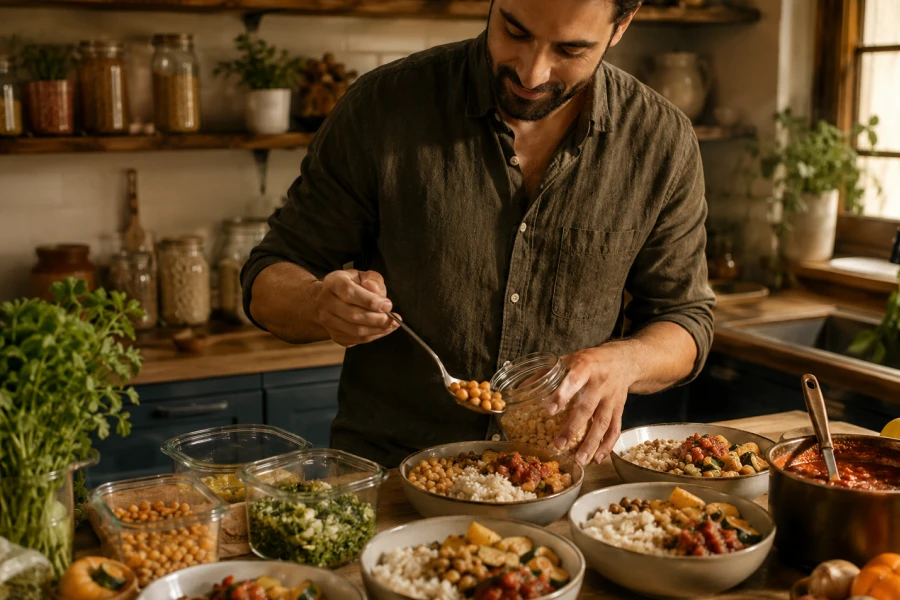
Meal planning with pantry staples changes the way you see a nearly empty kitchen. Instead of assuming there is nothing to cook, you begin to notice possibilities already on the shelf. A few reliable ingredients can become several meals with only minor additions. That shift makes shopping more strategic and everyday cooking more flexible. You do not need a restaurant-sized pantry or a complicated meal calendar. You need a working collection of foods that fit your appetite, schedule, and budget. Grains, beans, canned vegetables, sauces, spices, and frozen ingredients can do more than fill space. They can become the backbone of simple meals that adapt easily. Once you start planning around what you already own, fewer last-minute store runs become necessary. The kitchen feels more capable because you have built a useful foundation.
Flexible planning begins with meals that can change direction. A can of beans can become tacos, soup, grain bowls, or a warm salad. Pasta can support a tomato sauce, a vegetable skillet, or a quick baked dish. Rice works with roasted vegetables, eggs, leftover protein, and simple stir-fries. The value comes from seeing ingredients as building blocks instead of fixed recipes. This kind of planning creates flexible kitchen management for weeks that do not go exactly as expected. Keep a short list of meal combinations that your household enjoys. Then choose from those combinations based on what is available. The process feels lighter because nothing depends on one perfect ingredient. You can cook confidently without a special trip to the store.
Tracking ingredients does not need to become another complicated task. Start with the foods you replace most often and the items that tend to disappear unnoticed. Keep a running note near your shopping list or on your phone. Add something when you use the last package, not when you suddenly need it. Consistent ingredient tracking habits keep small shortages from becoming dinner problems. Check the refrigerator before shopping so you can pair fresh items with pantry basics. This prevents unnecessary duplicates and keeps meals more balanced. A quick inventory also shows which products are approaching their use-by date. Tracking works best when it feels like a glance, not a major project. The goal is awareness, not perfect control.
Most pantry meals become easier when you think in three parts. Begin with a base, such as grains, pasta, potatoes, or tortillas. Add a protein, whether that is beans, eggs, lentils, canned fish, tofu, or leftover chicken. Finish with flavor and color through vegetables, sauces, herbs, spices, or something acidic. This framework helps you create complete meals without needing an exact recipe. It also makes substitutions feel less intimidating. Frozen vegetables can stand in for fresh ones on a busy night. Canned tomatoes can become a sauce when there is no produce left. The structure remains useful because the ingredients can change. A simple pattern turns pantry cooking into a familiar, repeatable rhythm.
Buying practical basics can stretch a grocery budget without making meals feel repetitive. Choose ingredients that offer more than one use across the week. A bag of rice can support stir-fries, burrito bowls, soups, and breakfast bowls. Beans can become spreads, salads, tacos, or a hearty addition to pasta. Thoughtful budget-friendly pantry shopping focuses on value, not simply the lowest price. Purchase larger amounts only when you know they will be used. Compare what keeps well against what will need quick attention. Use pantry items to extend fresh ingredients instead of replacing them entirely. This approach helps every grocery trip work harder. A budget feels more manageable when the kitchen offers several useful paths to dinner.
Digital tools can make pantry planning feel more creative when inspiration runs low. Use a notes app to keep a list of meals your household liked. Save ingredient combinations that worked well together. Ask for recipe ideas based on foods you already own, then adjust the results to fit your preferences. Helpful AI meal planning ideas can be useful when you need a new perspective on familiar ingredients. Treat technology as a source of prompts, not strict instructions. You remain the person who knows your schedule, taste, and budget. A little support can prevent routine cooking from becoming stale. It can also help you spot new uses for ingredients you already buy. The best tools make your own decisions easier, not more complicated.
Planning works when it reflects how your week actually unfolds. Choose a few meals that require little effort and one that feels more enjoyable to cook. Keep flexible staples available for evenings when the plan changes. Notice which ingredients your household uses quickly and which ones remain forgotten. Then adjust the next list without judging the previous week. The system should get better through use, not feel fixed from the beginning. A pantry is most helpful when it supports your routines rather than asking you to change them. Over time, you will rely less on emergency store visits and random takeout. Dinner becomes easier because you already have a place to start. That quiet confidence is the real benefit of thoughtful planning.




Leave a comment