Fluffy pancake techniques often sound more mysterious than they really are. In practice, they come down to a few choices that protect air, moisture, and tenderness. The difference begins long before the first pancake reaches the pan. It starts with how you measure, mix, rest, and heat the batter. A reliable approach lets home cooks enjoy tall, soft stacks without relying on luck. You do not need to chase perfection with every flip. You only need to understand which habits make the batter work for you. Once the basics feel familiar, the process becomes calm and repeatable. Breakfast starts to feel less like a test and more like a welcome routine. That confidence makes even a simple stack feel special.
Gentle handling is one of the most important habits in pancake cooking. Mix wet and dry ingredients only until they come together. A few streaks or small lumps will disappear as the batter rests. Overmixing develops too much structure and can leave pancakes dense. Think of the bowl as a place for combining, not beating. The best pancake flipping confidence begins with a batter that feels light from the start. Use a wide spoon or flexible spatula for calm, deliberate folds. Then let the mixture sit for several minutes. That short pause allows the leavening to begin working. Restraint creates the lift that aggressive stirring often removes.
Ingredient temperature can make the process feel more predictable. Cold milk and eggs are not always a problem, but room-temperature ingredients blend more smoothly. Measure flour lightly so the batter does not become heavy before it reaches the pan. A level scoop works better than packing flour into a cup. When you want extra tenderness, a small amount of yogurt or buttermilk can help. Keep sweet add-ins modest because too much sugar encourages early browning. For something different, fold in creative pancake mix-ins after the main batter is ready. This order keeps the ingredients evenly distributed. It also gives you more control over each pancake’s texture. A better mix creates a better first bite.
High heat may look efficient, but it often produces dark outsides and undercooked middles. Moderate heat gives the batter time to rise before the surface becomes too brown. Let the pan warm gradually instead of turning the burner to its highest setting. A small test pancake tells you more than guessing ever will. If it browns too quickly, lower the heat and wait a minute. If it looks pale after several minutes, raise the heat slightly. Consistency matters more than speed when you are cooking several batches. Wipe away burned butter between rounds if needed. A clean surface supports even coloring. The right temperature makes every step after pouring much more forgiving.
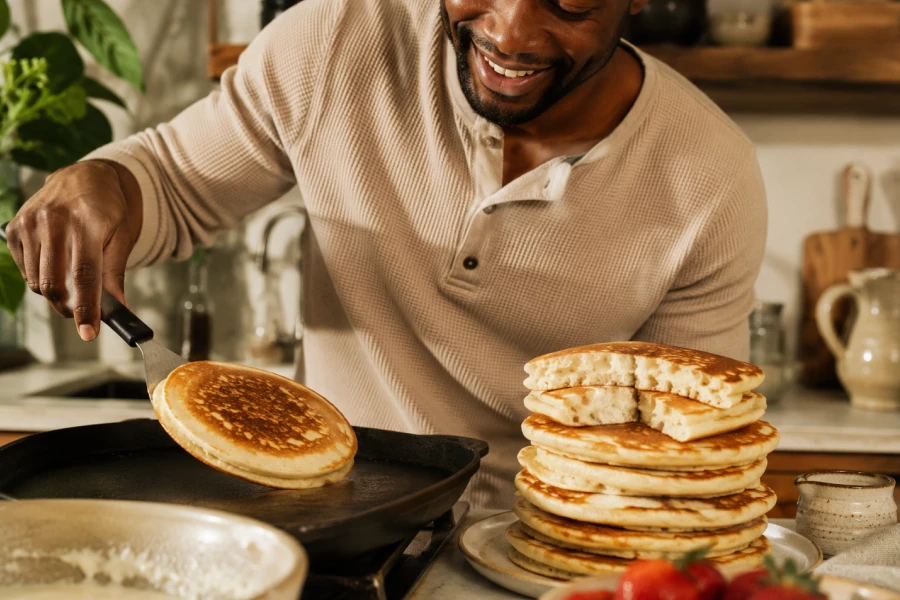
The first flip should happen after the pancake gives you clear signals. Look for bubbles that stay open and edges that no longer look wet. Slide the spatula beneath the entire round before lifting. Turn the pancake in one smooth motion rather than several hesitant movements. This is where patience pays off. A confident flip keeps the shape intact and prevents batter from spreading across the pan. When the second side cooks, it usually needs less time than the first. Keep your eyes on the color, not just the clock. Useful breakfast recipe inspiration often starts with mastering this small but satisfying moment. Once the flip feels easy, the rest follows naturally.
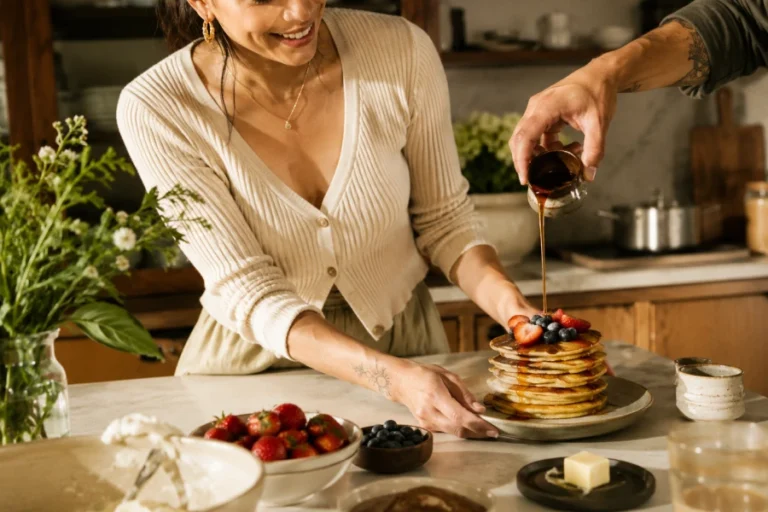
Warm plates help pancakes stay tender while you finish the batch. Stack them loosely rather than pressing them into a tight tower. A clean kitchen towel can keep them cozy for a few minutes without trapping too much moisture. Serve butter when the pancakes are hot enough to soften it naturally. Add fruit, nuts, or syrup only when you are ready to eat. That timing protects the contrast between crisp edges and soft centers. Let each person build a plate that fits their appetite. The smallest details create a more welcoming breakfast experience. They also make cooking for others feel less hectic. A diner-style stack is often just thoughtful timing on a home scale.
Great pancakes do not need to be reserved for a leisurely weekend. Mix dry ingredients ahead and store them in a labeled container for faster mornings. Cook a larger batch when you have time, then save the extras for later. A few minutes in a toaster oven can bring back their warmth and soft texture. This makes make-ahead pancake meals feel genuinely practical rather than like an afterthought. Pair leftovers with fruit, eggs, or yogurt for a balanced breakfast. Keep your favorite method written down after you find it. That record makes busy mornings easier. With a little preparation, a comforting stack can fit any day of the week. The technique becomes useful because it adapts to your life.


Leave a comment