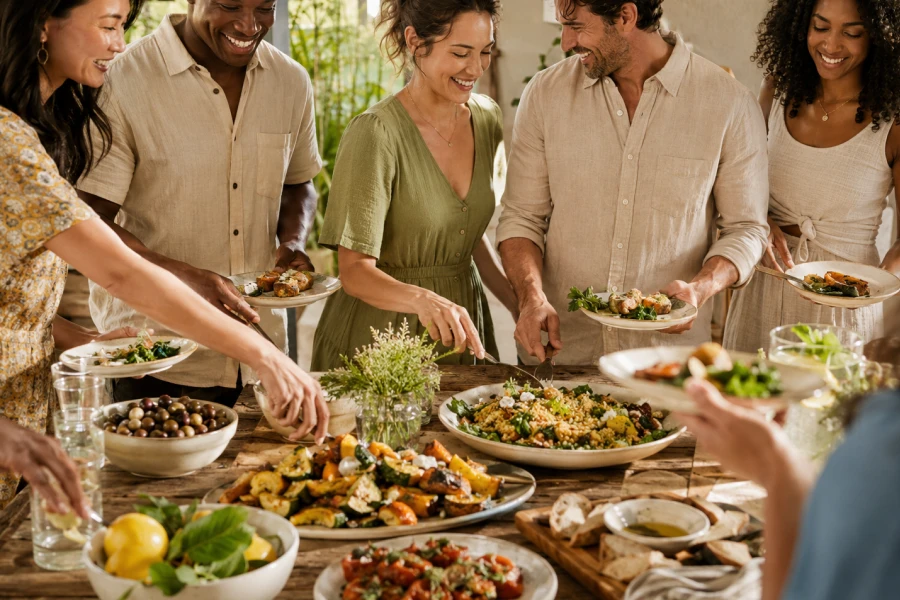
An easy gathering menu plan gives a host a practical path from invitation to final cleanup. Feeding a crowd can feel intimidating when every dish depends on perfect timing. It becomes easier when the menu is built around food that is generous, flexible, and simple to serve. You do not need to create a restaurant-style experience at home. You need a meal that holds together while people arrive, talk, and move around the room. The best plans begin with a few familiar dishes and enough flexibility for small changes. This lets you cook with more confidence and spend less time managing last-minute details. A clear menu also makes shopping, prepping, and serving easier to divide into manageable steps. The gathering feels more relaxed because the host is not carrying every decision alone. That is how a crowd becomes a table full of people you are happy to feed.
A reliable main dish gives the entire menu a center. Choose something you understand well enough to cook without constantly checking instructions. Baked pasta, roasted chicken, chili, tacos, braised meat, or a large vegetarian casserole can all work beautifully. The main should be easy to portion and forgiving if it sits briefly before serving. Pair it with sides that do not compete for the same oven space. This creates a smoother path from cooking to table. A familiar centerpiece also lets guests know what kind of meal to expect. Keep the ingredients recognizable even if the flavors feel special. The best main dish is not necessarily the most impressive one. It is the dish that lets you host with confidence instead of worry.
Supporting dishes should bring contrast without adding unnecessary work. A crisp salad can balance a rich main dish. Roasted vegetables can add color and make the table feel more complete. Bread, rice, potatoes, or another simple starch can help stretch the meal for a larger group. Keep at least one side dish easy enough to prepare close to serving time. Then rely on others that can wait comfortably. This is where a calm hosting rhythm becomes especially useful. You want a menu with different temperatures, textures, and colors, not seven recipes demanding the same attention. Simple sides also make leftovers easier to enjoy. Good support dishes should make the main feel stronger, not make the kitchen more chaotic.
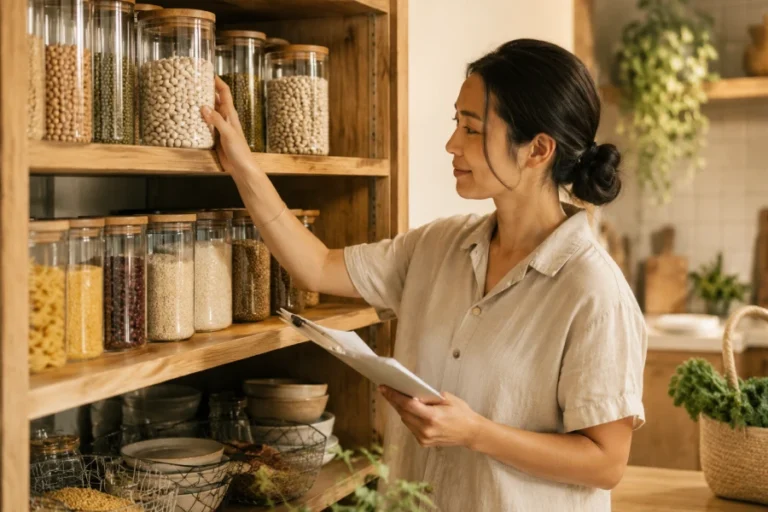
Preparation should free you up, not fill every hour before the gathering. Start by handling tasks that create clutter or require focus. Wash produce, mix dressings, set serving dishes, and make space in the refrigerator. Cook any components that taste better after resting. A few dependable make-ahead hosting dishes can reduce the number of tasks waiting in the last hour. Keep one final task, such as warming bread or tossing a salad, so the meal still feels fresh. Then stop preparing early enough to change clothes and greet guests calmly. That moment of readiness changes the tone of the entire evening. When the host is settled, everyone else feels more comfortable too. Time is the ingredient that makes hospitality feel generous.
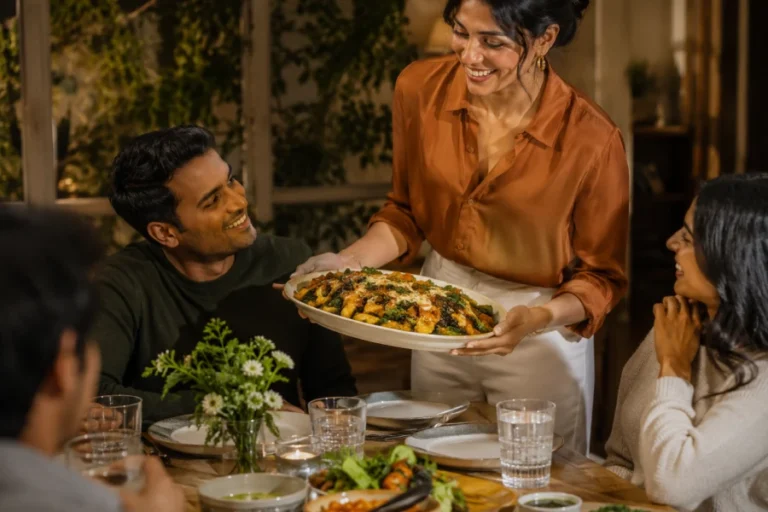
Serving does not need to feel formal to feel thoughtful. Set food out in a way that lets guests understand what to do without asking. Use serving utensils that match the dishes and place napkins nearby. Keep drinks accessible so people can help themselves. A large platter or buffet can be easier than plating every meal individually. Include simple labels only when dietary needs make them useful. You can also serve components separately so people can build the plate they want. This creates less pressure for the host and more comfort for the guest. A natural serving flow keeps the room moving without making the meal feel rushed. The best setup supports conversation as much as it supports eating.
Generosity does not come from an endless number of dishes. It comes from enough food, clear flavors, and the feeling that people are welcome to relax. Choose portions that can stretch slightly without creating waste. Add bread, salad, fruit, or a simple dessert to make the table feel abundant. Familiar crowd-pleasing meal ideas often work because guests recognize them immediately. Keep the menu rooted in foods people enjoy rather than recipes that feel difficult to execute. One beautiful bowl of pasta can feel more memorable than several complicated plates. The host’s warmth will always matter more than culinary theatrics. Simple food becomes generous when it is served with ease and attention.
Your best gathering menu will probably emerge through repetition. Notice which dishes are easy to transport from kitchen to table. Pay attention to what guests finish first and what creates the most cleanup. Keep the meals that help you stay present during the evening. Replace the ones that cause stress, even if they look impressive on paper. This is how your own hosting style becomes clear. You may prefer a casual buffet, a shared pasta dinner, or a table full of small plates. There is no single correct way to feed a crowd. The most effective menu is the one that feels natural in your home. With each gathering, the plan becomes more relaxed, more useful, and more yours.


Leave a comment